
Your Most Valuable Asset Might Be About To Walk Out The Door
Aug 03, 2026
I came across a story the other day that I haven't been able to shake. And ever since, it's been rattling around in my head every time I walk a shop floor.
Here's the story. Back in the late 1970s, at a facility called Y-12 in Oak Ridge, Tennessee, the government began manufacturing a classified material codenamed FOGBANK — a component used in a nuclear warhead. They made it from 1975 until 1989, then shut down the line and eventually decommissioned the facility. Job done. Everybody moved on.
Fast-forward to around 2000. The Navy needs to refurbish those aging warheads, and to do that, they need fresh FOGBANK. So the government goes to make some more.
And it can't.
The records of how it was actually made were thin. The engineers and technicians who knew the process — the ones who knew the quirks, the sequence, the little things nobody thinks to write down — had retired, moved on, or passed away. The know-how had simply walked out the door. So the most resource-rich, security-obsessed organization on the planet spent something like $23 million chasing a substitute that didn't work, then another $69 million painstakingly reverse-engineering its own product. It cost years. (And yes — this very story popped back up in the news again recently, which is how it found me.)
Read that one more time: they forgot how to make their own thing. Not because they lost the blueprint, but because the people who knew how to do it left, and nobody had captured what was in their heads.
So what does a nuclear secret have to do with you, if your value proposition is that you bend steel, machine tight-tolerance parts, run an HVAC outfit, or pour concrete?
Plenty. Because the exact same thing is happening inside small and mid-sized industrial businesses all over the country right now — just quieter, and one retirement at a time.
This Isn't a Government Problem.
It's a Demographics Problem With Your Name On It.
I write a lot about not getting blindsided by a competitor — the RIMs and American Airlines of the world who got too cocky on top. This is a different kind of blindside, and frankly a sneakier one, because the threat isn't a competitor at all. It's the calendar.
The wave is already here. The latest labor projections have retirements pulling roughly 6 million workers — about 3.7% of the entire U.S. workforce — out of the workforce by 2032. And manufacturing isn't watching from the sidelines: it's one of the handful of sectors where people are already retiring faster than new workers are coming in. Nearly a quarter of U.S. manufacturing workers are 55 or older. The Manufacturing Institute and Deloitte have projected that about 1.9 million manufacturing jobs will go unfilled by 2033.
But here's the part that should make an owner sit up. It isn't really about headcount. You can post a job opening. What you can't post for is the 30 years of "I can tell that bearing's about to go by the sound it makes." Industry folks estimate that as much as 70% of the critical operating knowledge in a plant is undocumented — it lives in people's heads, not in your systems. When one of those people retires, you don't lose an employee. You lose a capability. And just like FOGBANK, you usually don't find out which capability until the day you reach for it, and it isn't there.
If you've read my stuff before, you know I'm a broken record about the I³ Value Proposition — that what you sell has to be Innovative, Indispensable, and Inspirational. Well, here's the twist most owners miss: the most indispensable thing in your whole operation may not be your product at all. It may be the unwritten knowledge a handful of your veterans carry around in their heads. And it has a retirement date.
Three Hard Truths About the Knowledge Walking Out Your Door
1. Your Most Valuable Asset Doesn't Show Up on the Balance Sheet.
You can tell me the depreciated value of every machine on your floor. I'd bet you can't put a number on what happens when the one person who knows why the press needs that specific adjustment every Tuesday at 3 p.m. walks out for good. That undocumented know-how — the workarounds, the failure patterns, the "don't run it above 85 degrees" tricks — is frequently the single most valuable thing the company owns. And it's the one thing that's completely invisible until it's gone.
Bottom line: The knowledge in your veterans' heads is an asset. Start treating it like one — before it depreciates to zero overnight.
2. It Won't Feel Like a Crisis Until It's Too Late.
A competitor poaching your biggest account is loud — you see it on the sales report, and you scramble. This doesn't announce itself. Nobody's leaving for a competitor — the overwhelming majority of these folks are retiring permanently, so that expertise isn't returning to the labor pool at all. It leaves one person, one machine, one shift at a time, so it never trips the alarm that calls an emergency meeting. By the time you feel it — a job you can't quote with confidence, a repair nobody can diagnose — the person who'd have fixed it in twenty minutes is on a fishing boat in Florida.
Bottom line: Don't wait for the pain to show up in the numbers. By then the cure is gone.
3. You Can't Fix This With a Binder and an Exit Interview.
This is the trap that snares even the owners who see it coming. They schedule a couple of exit interviews, ask the retiring expert to "write down the process," and call it handled. It almost never works. The most valuable knowledge is sensory and instinctive — it's felt, not articulated — and your expert genuinely can't tell you half of what they know, because they don't consciously know they know it. The companies that actually crack this learned the same lesson: don't ask your experts to write documents. Capture them doing the work. Pair them with someone whose only job is to film it, ask the dumb questions, and turn it into a simple guide.
And no — software won't ride to the rescue either. In one recent survey, 98% of manufacturers said they were exploring AI tools to help with exactly this, but only about 1 in 5 felt ready to actually use them. The tool is never the strategy.
Bottom line: Capture the work in motion, not the memo after the fact.

This Isn't an Ops Problem.
It's a Value Problem.
Here's where most owners file this in the wrong drawer. "Knowledge capture" sounds like an operations headache — something for the plant manager to lose sleep over. It isn't. It's a value-to-the-customer issue, and that makes it a growth issue.
Think about what your customer is actually buying from you. They're not buying your machine time. They're buying the promise that the part shows up to spec, on time, every time. And that promise is held together by exactly the kind of unwritten know-how we've been talking about. Joe is the reason the process is reliable. So when Joe retires, and the process quietly drifts from dependable to shaky, you haven't created an internal hiccup — you've broken the promise the customer counts on.
It's the difference between "we make cars" and "we make cars whose tires don't fly off at highway speed." That second part isn't a manufacturing detail — it is the value proposition. Remember the I³ test: this is the Indispensable piece, the thing the customer trusts you for. Lose the know-how that guarantees it, and you haven't lost an ops capability. You've lost your value proposition.
And this cuts hardest for the smaller company. When a big customer hands you their business, they're extending trust you have to keep re-earning — and you don't have the brand-name cushion to survive a reliability stumble the way they do. One process that slips from dependable to unpredictable, because the one person who made it dependable is gone, can quietly kneecap your growth: no reorder, no referral, no "let's give them the bigger contract." The know-how walking out the door isn't just a cost line. It's a ceiling on how big you're allowed to get.
Bottom line: Your know-how is the silent guarantor of your value proposition. Protect it like the growth asset it is.
Putting This Idea Into Action
Remember those four question areas I'm always going on about — Issues, Decisions, Information Gaps, and Know-How Gaps? This is the Know-How Gap, in its purest, most expensive form. So let's close it. Here's a do-it-this-quarter sequence.
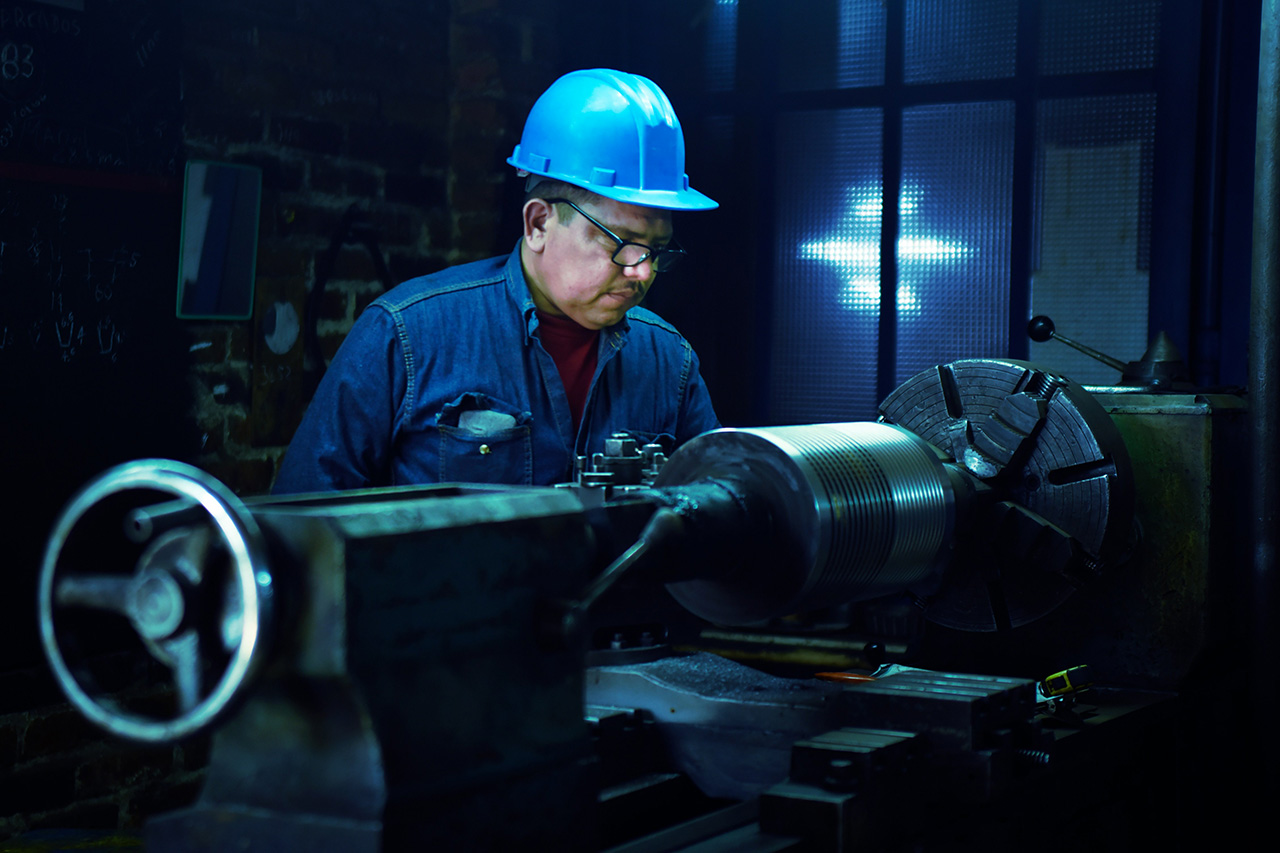
- Map your single points of failure — by name. Forget the org chart. Walk the floor and ask, for each critical task: if this one person didn't show up Monday, what would stop? Flag every spot where the honest answer is "nobody else can do that." Then lay age and tenure on top. That short list — usually only five or six names — is your real risk register.
- Capture the work, not a binder. Take your highest-risk veteran and pair them with a "capture partner" — a younger employee with a phone. The expert's only job is to do the work like normal. The partner films it, asks, "Why'd you do that?" and turns it into a short visual guide. Start this week. You can get fancier later; you can't get the person back later.
- Build overlap on purpose. The cheapest insurance you'll ever buy is paid time where the veteran and their eventual replacement work the same problems side by side. Done right, that's what collapses a new hire's ramp from years down to months. Budget the overlap before the retirement date, not after.
- Make it a strategy item — with an owner and a date. "We really should capture that knowledge" dies in every shop in America. As I always say, even "do nothing" is a decision — so make a real one. Put it on someone's plate, set a deadline, and review it as you would your biggest account.
The Bottom Line
The U.S. government had the smartest people, the deepest pockets, and every possible reason to keep its knowledge intact — and it still forgot how to make its own product, because it assumed the know-how would always just be there. You're running a lot leaner than they are. You don't have $69 million hiding between the proverbial seat cushions.
The most dangerous knowledge in your company is the knowledge that lives in exactly one head. So challenge yourself, and challenge your team — and do it with intensity:
- Who in my shop is the only person who can do something critical — and what actually happens the Monday after they stop showing up?
- If my three most experienced people retired this year, which promises to my customers would suddenly be at risk?
- Is my best knowledge a documented, transferable asset — or is it just a hope?
Sources: GAO/NNSA reporting on the FOGBANK/W76 program; Indeed Hiring Lab U.S. labor force projections (2026); The Manufacturing Institute & Deloitte manufacturing skills gap research; industry analyses of "tribal knowledge" loss in manufacturing (2026); Redwood Software Manufacturing AI & Automation Outlook (January 2026).

